No products in the cart.
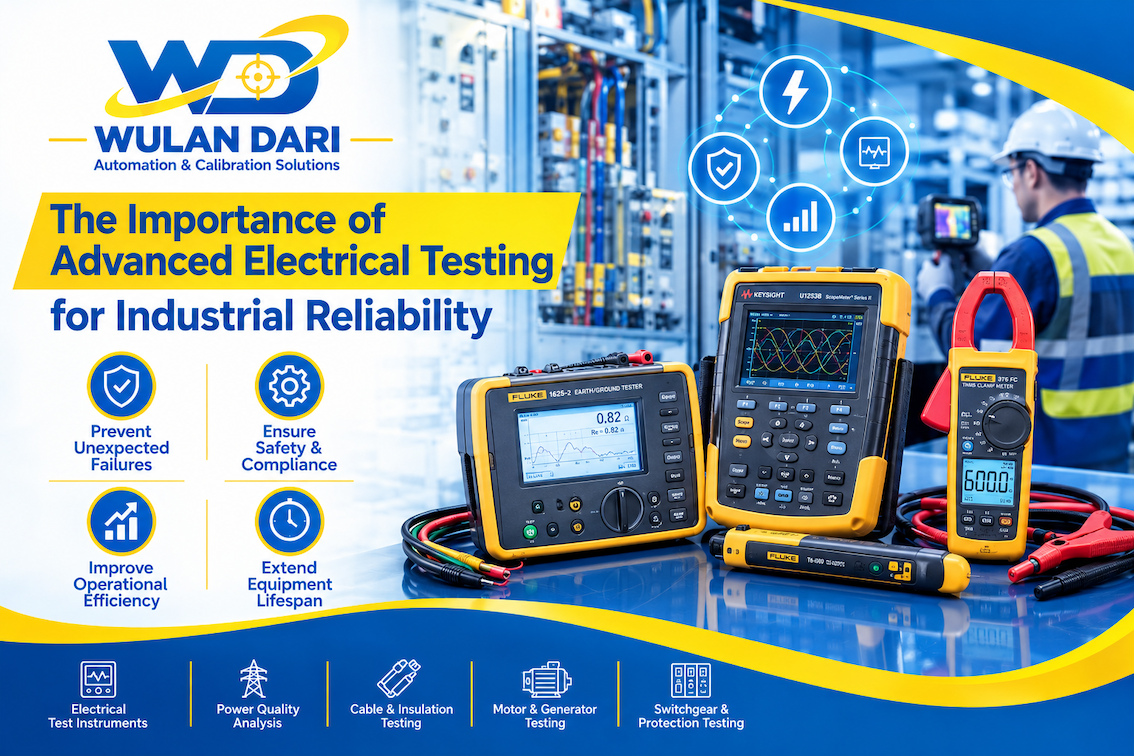
In the world of industrial automation and maintenance, ensuring the safety and reliability of electrical systems is not just a regulatory requirement—it is a critical operational necessity. From preventing catastrophic equipment failure to ensuring personnel safety, the role of precision electrical test instruments cannot be overstated. These tools are the frontline defense against insulation breakdown, motor failure, and electrical hazards.
Understanding the Scope of Electrical Testing
The category of electrical test instruments is broad, covering devices designed to measure everything from basic voltage to complex insulation resistance and high-voltage breakdown. Key instruments in this field include:
- Hipot Testers: Used to verify the dielectric strength of insulation by applying high voltage.
- Megohmmeters: Essential for measuring insulation resistance to detect moisture, dirt, or degradation.
- Ground Resistance Testers: Critical for ensuring proper grounding systems are in place to protect equipment and personnel.
- Multimeters and Clamp-ons: Everyday tools for diagnosing electrical circuits.
Investing in high-quality instruments from trusted brands like Vitrek, Chroma, SCI, and Megger ensures that maintenance teams can perform accurate diagnostics and predictive maintenance, ultimately reducing downtime and extending the lifespan of critical assets.
Specialized Testing for Motor Reliability
Motors are the workhorses of industrial facilities, and their failure can halt production lines instantly. This is why motor testing requires a specialized approach. Unlike static electrical systems, motors involve rotating components, windings, and insulation that are subjected to mechanical stress, thermal cycling, and environmental factors.
Advanced motor testing goes beyond simple continuity checks. It involves analyzing the health of the stator windings, rotor bars, and insulation systems. Tools in this category are designed to detect issues such as:
- Turn-to-turn shorts in windings
- Rotor bar defects
- Insulation degradation due to overheating
- Air gap irregularities
By utilizing dedicated motor analyzers, technicians can diagnose these faults early, preventing unexpected breakdowns and allowing for planned, cost-effective repairs rather than emergency replacements.
Featured Solution: The Megger BAKER DX RLC 12HO
For facilities requiring the highest level of diagnostic capability, the Megger BAKER DX RLC 12HO stands out as a premier solution. This static motor analyzer is a comprehensive tool designed for full Low Voltage (LV) RLC and High Voltage (HV) DC testing.
Engineered for precision and durability, the DX RLC 12HO allows maintenance professionals to perform a complete suite of tests on electric motors without the need for multiple standalone devices. Its key features include:
- Full LV RLC Tests: Resistance, Inductance, and Capacitance measurements to detect winding faults.
- HV DC Tests: High-voltage DC testing for insulation integrity.
- Static Analysis: The ability to assess motor health while the motor is offline and stationary, making it ideal for scheduled maintenance windows.
With a model number of 99-DX12HO-ZDS3RC, this unit is built to deliver reliable data that engineers can trust to make informed decisions about motor maintenance and repair. Whether you are managing a fleet of critical pumps, compressors, or conveyor systems, the DX RLC 12HO provides the data necessary to predict and prevent failures.
Conclusion
In summary, the integration of robust electrical test instruments and specialized motor testing protocols is essential for any facility aiming for operational excellence. By leveraging advanced technology—such as the Megger BAKER series—and partnering with a reliable supplier like Wulan Dari, organizations can ensure their electrical infrastructure remains safe, efficient, and reliable for years to come.
For a complete catalog of electrical test instruments and motor testing solutions, explore the full range at Wulan Dari’s Electrical Test Instruments section.